

There’s been a lot of noise lately. GEO this, AEO that. Generative Engine Optimization. Answer Engine Optimization. Every thought leader has an opinion. Most of them are guessing.
I wanted to know what’s actually happening. Not what we think should happen, not what the conference circuit is selling. What are companies really asking for when they hire SEO professionals in 2026?
So I pulled over 6,400 recent job descriptions from LinkedIn across the US, UK, Canada, Germany, France, and UAE. All SEO-related roles, from junior specialists to VP-level positions. I ran them through an analysis to find out: has the rise of LLMs actually changed what organizations expect from us?
The short answer: yes, but not in the way most people assume.
The “GEO” Question Is Settled
Let’s address the terminology debate first. I was curious whether any of these new terms had real traction, or if it was all LinkedIn performance art.
Turns out “GEO” won. It appears in 323 job descriptions, significantly ahead of “AEO” (Answer Engine Optimization) at 128 mentions. ChatGPT as a specific skill requirement shows up in 279 postings. LLM knowledge is mentioned 210 times.
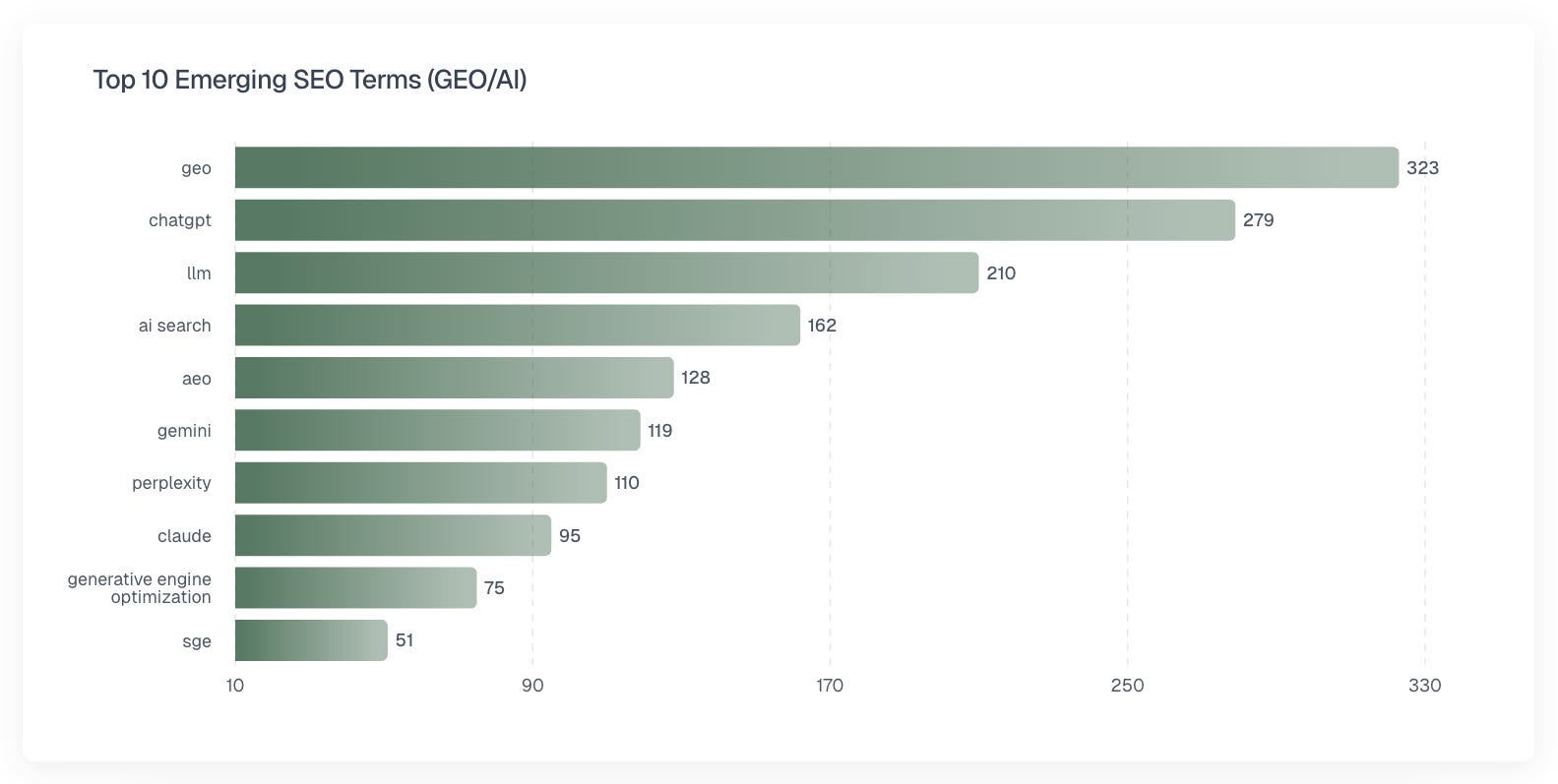
That’s roughly 16% of all postings explicitly mentioning AI search or LLM-related terms. Not a majority, but substantial enough that you can’t ignore it.
But here’s the context that matters: Google Analytics still appears in over 1,100 job descriptions. Semrush shows up 697 times. The traditional toolkit isn’t going anywhere.
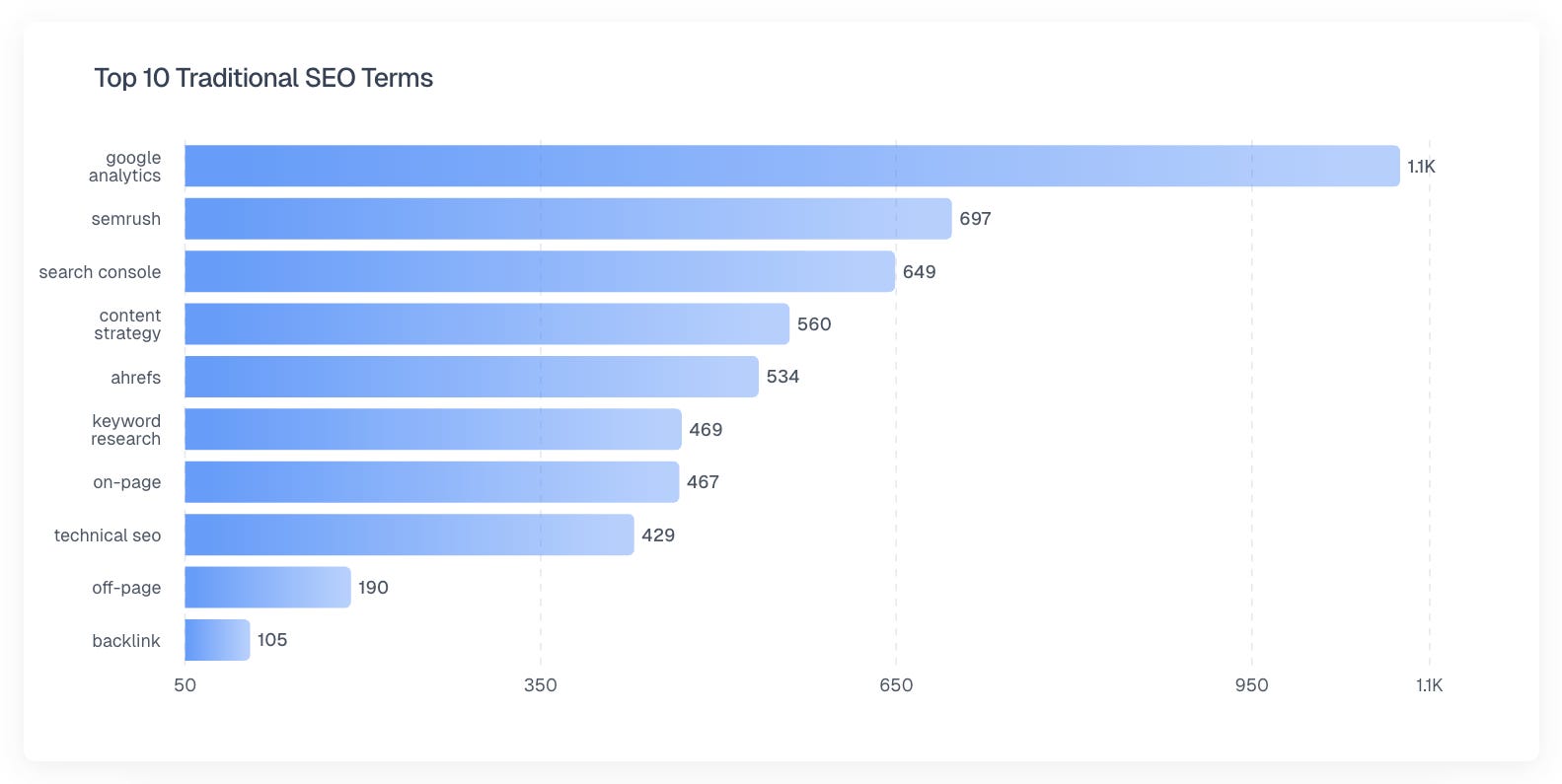
The new skills are additive, not substitutive. You still need to know your way around Search Console and Ahrefs. You just also need to understand how LLMs work now.
The US Is Playing a Different Game
Here’s where it gets interesting. The adoption of AI-related requirements isn’t even close to uniform globally.
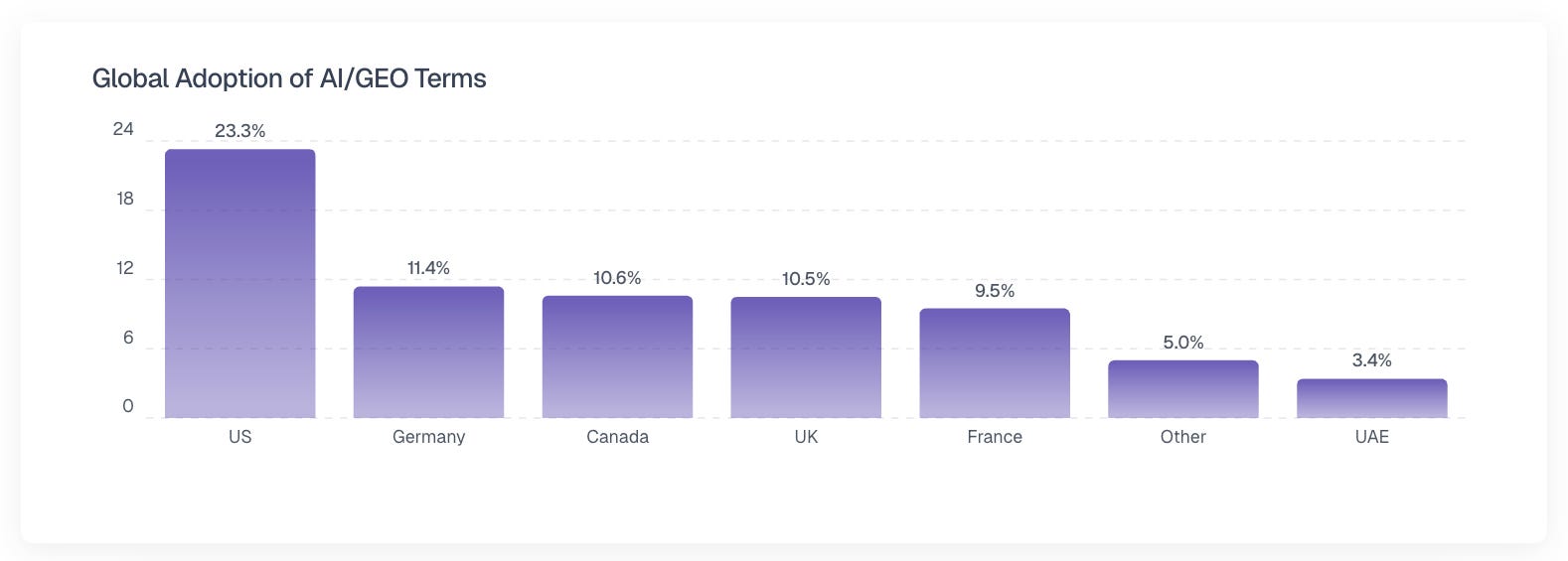
In the United States, 23.3% of SEO job postings mention AI/GEO terms. That’s nearly one in four jobs. In Germany, it’s 11.4%. Canada and UK hover around 10.5%. France sits at 9.5%. The UAE? Just 3.4%.
The gap between the US and everywhere else is striking. American companies are either ahead of the curve or overreacting to the hype. Probably both, depending on the company.
It’s a Leadership Problem, Not an Execution Task
One of the clearest patterns in the data: AI search optimization is being treated as a strategic challenge, not a tactical one.
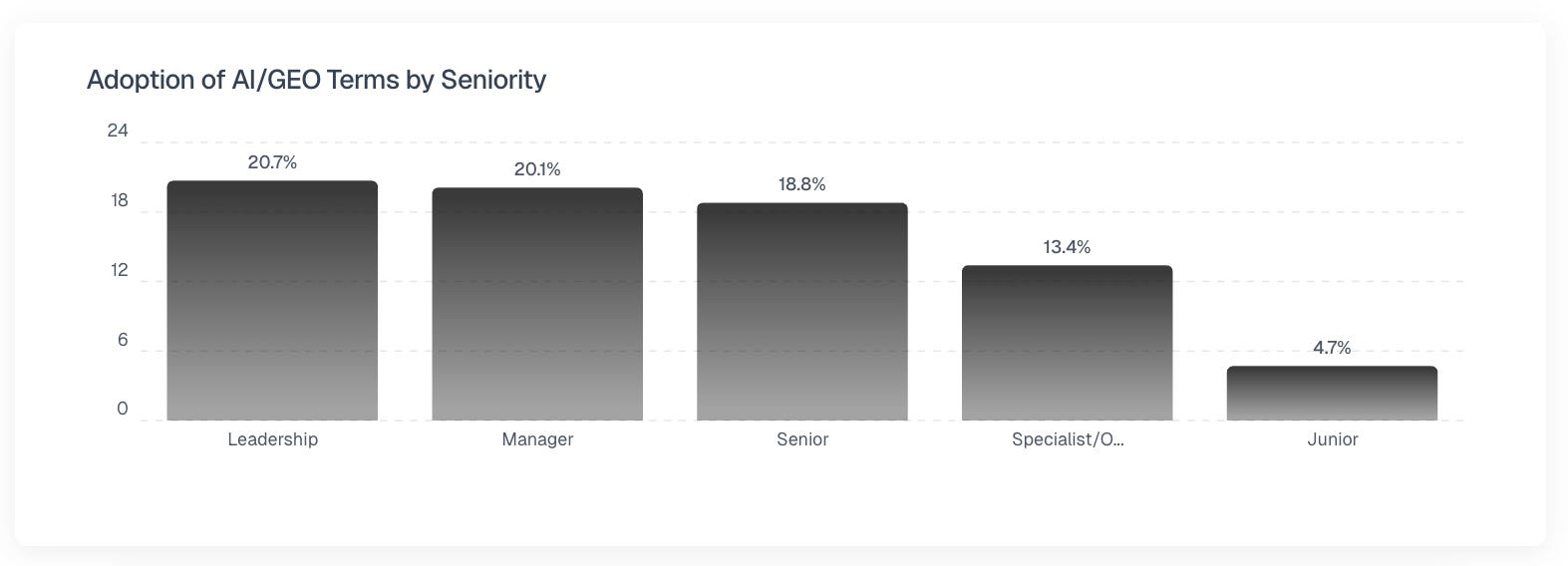
Leadership roles (Head, Director, VP) show a 20.7% adoption rate for these new skills. Managers are at 20.1%. Junior roles? Just 4.7%.
Companies aren’t hiring entry-level employees to “do the AI stuff.” They’re bringing in experienced strategists to figure out what the AI stuff even means for their business.
This tracks with reality. There’s no established playbook for GEO yet. No checklist to follow. When your traffic from AI Overviews starts mattering, you need someone who can think through the implications, not just execute a process that doesn’t exist.
The Technical Escalation
Here’s an interesting finding: jobs requiring AI/GEO skills are twice as likely to also require coding skills.
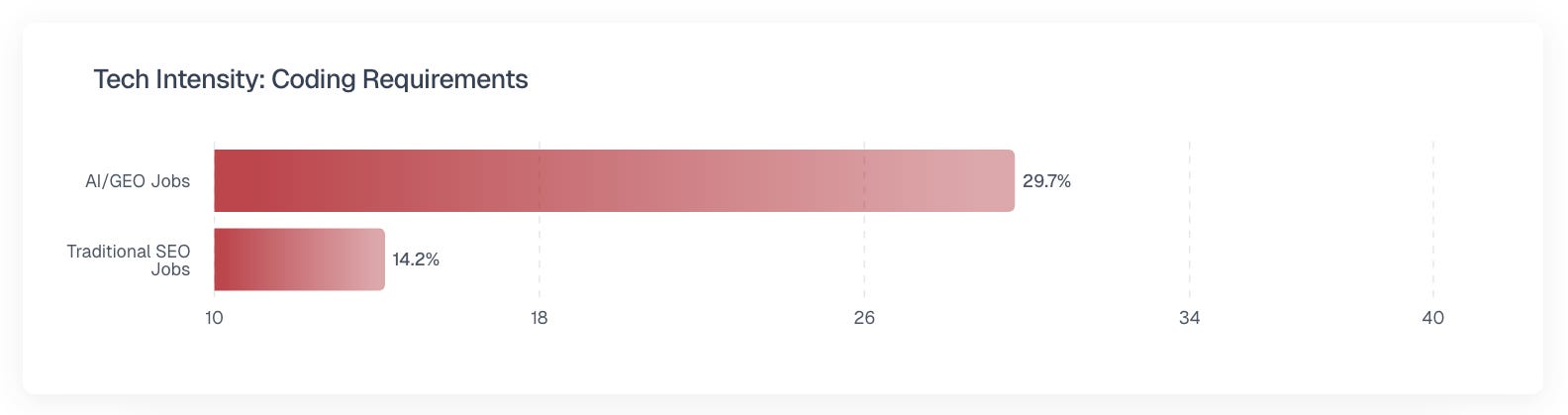
29.7% of AI-focused SEO jobs require Python, SQL, or similar technical abilities. Traditional SEO jobs? Just 14.2%.
This isn’t about prompting ChatGPT better. The new “GEO” role is becoming a hybrid part marketer, part data scientist. You’re expected to analyze, build, and automate, not just optimize.
Technical SEO requirements also jump significantly in AI-focused roles (+19.1% compared to traditional postings). Schema markup, site architecture, crawlability, these foundational skills become more important, not less, when you’re trying to get cited by language models.
The Tool Stack Is Evolving (Slowly)
Despite all the AI buzz, the actual tooling requirements tell a more grounded story. Semrush and Ahrefs remain the undisputed kings of the SEO toolkit. But ChatGPT has firmly planted itself as the third most requested tool proficiency.
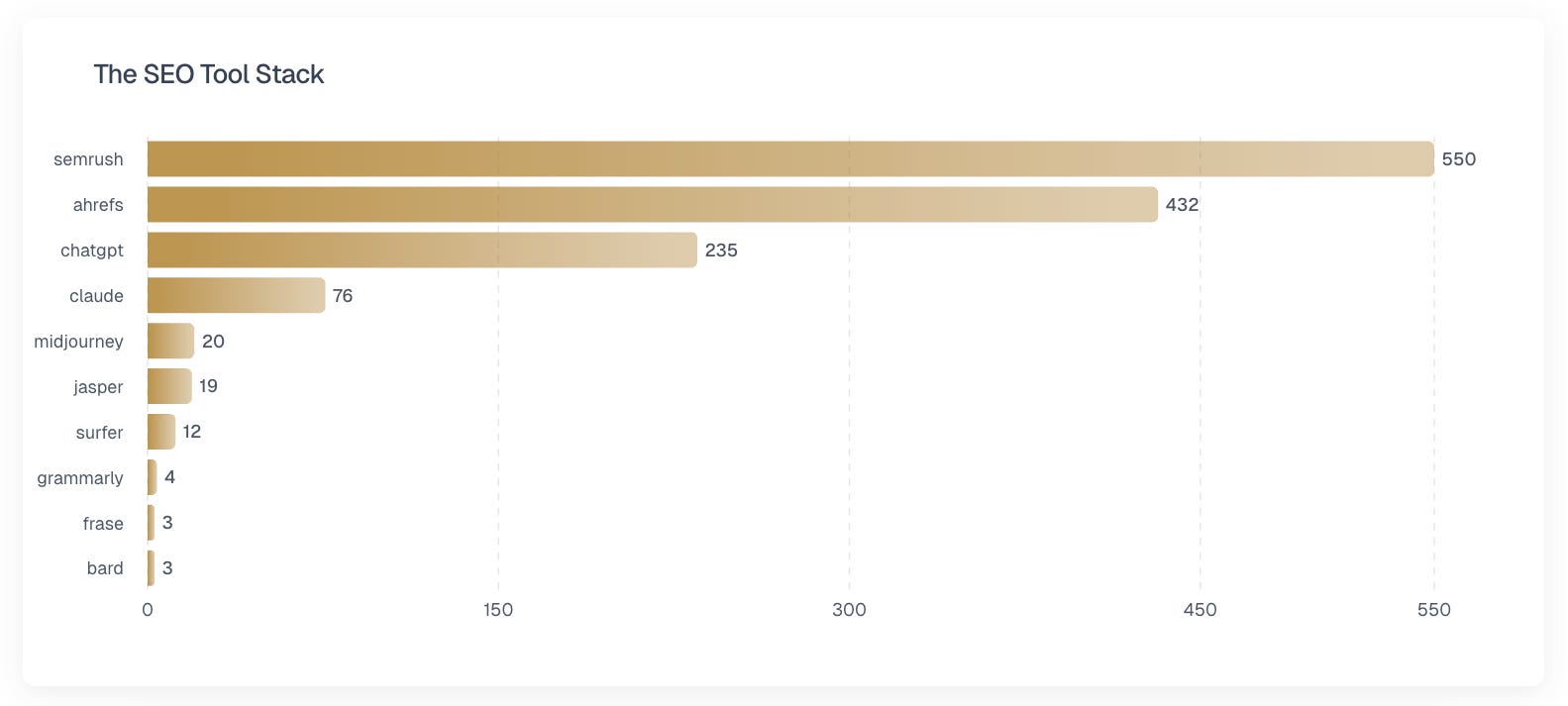
Specialized AI writing tools like Jasper and Surfer SEO? Still niche. Claude and Perplexity are showing up, but in small numbers. The market hasn’t fragmented into a dozen AI tools yet—it’s consolidated around ChatGPT as the default.
I believe companies don’t care which AI tool you use. They care that you understand how to work with LLMs at all. ChatGPT is shorthand for “can work with AI,” not a specific technical requirement.
What This Actually Means for Your Career
Let me be direct about the implications.
If you’re a SEO professional and you’re planning to keep doing exactly what you’ve been doing, you’ll probably be fine for now. “Google Analytics” still appears in over 1,000 job descriptions. “Keyword Research” is still mentioned more often than “GEO.” The fundamentals haven’t been replaced.
But if you want to advance into leadership roles, the math is changing. You need to be conversational in LLM concepts. You definitely need to be able to think strategically about problems that don’t have established solutions yet.
The Real Question
Here’s what I keep coming back to: is any of this actually about skill, or is it about signaling?
Some percentage of those 323 GEO mentions are probably just recruiters adding buzzwords. Some companies asking for “LLM knowledge” couldn’t tell you what they want someone to do with it.
But the pattern is consistent enough across regions, seniority levels, and company types that I don’t think it’s all noise. Something real is shifting in how organizations think about search optimization.
The debate over whether GEO is “real” or just “SEO with extra steps” misses the point. Companies believe it’s different enough to change their hiring criteria. That makes it real in the only way that matters for your career.
My suggestion: don’t overthink the terminology. Focus on the underlying capabilities. Get comfortable with technical analysis and develop your strategic thinking.
The specific acronym might change. The direction won’t.